18 March 2026
Easy Read Documents: Who Benefits and Why They Matter

When organisations talk about accessibility and inclusive communication, Easy Read documents are often mentioned. But who actually benefits from Easy Read, and when should organisations provide information in this format?
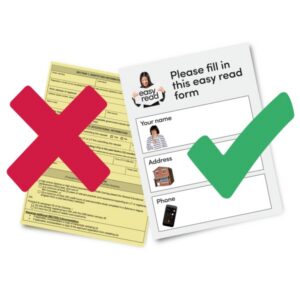
Easy Read documents are designed to make written information easier to understand. By combining clear language, thoughtful design, and supportive images, Easy Read helps people who may struggle with standard written communication to access important information independently.
In this blog, we explain what Easy Read is, who benefits from Easy Read documents, and why organisations should consider providing information in this accessible format.
What Is Easy Read?
Before we get into who it benefits, here are the key elements of Easy Read:
Easy Read documents typically include:
-
- Clear, simple language using short sentences and everyday words
- Supportive images or symbols that help explain the text
- Large, easy-to-read fonts
- Clear headings and structured sections
- Simple layouts with plenty of white space
The goal of Easy Read documents is to remove unnecessary barriers so that people can understand information independently.
Easy Read is not limited to printed documents. Organisations can also provide Easy Read content in formats such as:
-
- PDFs (including accessible and editable PDFs)
- Webpages
- Online surveys
- Easy Read Videos
Because of this, producing a true Easy Read document involves more than just simplifying text. It requires careful language choices, accessible design, and often specialist knowledge.
Why Design Matters in Easy Read Documents
Easy Read is not just about the words on the page – visual design plays a crucial role in making information accessible.
Many people with learning disabilities may also experience visual processing difficulties. As a result, colour contrast, layout, and image placement must all be carefully considered.
At A2i, we design Easy Read documents to ensure they are clear and accessible.
This includes:
-
- Checking colour contrast between text and background
- Using images that support and reinforce the meaning of the text
- Breaking content into smaller, manageable sections
- Avoiding cluttered or visually overwhelming layouts
Branding is also incorporated. We follow our clients’ brand guidelines while ensuring accessibility remains the priority.
Who Benefits from Easy Read?
The main purpose of Easy Read is to support people who may find standard written information difficult to understand.
However, the benefits extend beyond the primary audience.
1. Adults with learning disabilities
Easy Read is primarily designed for adults with learning disabilities. Standard documents filled with complex language, long paragraphs, or technical terminology can create significant barriers to understanding. Easy Read helps remove these barriers.
With Easy Read documents:
-
- People can access information independently
- They can make informed decisions about healthcare, services, finances, or rights
- They can participate more confidently in discussions, meetings, and community activities
- Important information becomes clearer and less overwhelming
For many people, Easy Read provides access to information that might otherwise be inaccessible.
2. People who find complex information difficult
Easy Read can also support people who experience temporary or permanent challenges with reading or processing information.
This may include people who:
-
- have cognitive conditions such as a brain injury, stroke, or dementia
- experience mental health challenges that affect concentration
- speak English as an additional language
- prefer visual or simplified information
In these situations, Easy Read can make complex information more approachable and easier to understand.
3. Supporters, carers, and professionals
Easy Read documents can also support those who help others access information.
For example:
-
- Support workers can use Easy Read to explain information more clearly
- Healthcare professionals can improve understanding and support informed consent
- Family members can feel reassured that their loved ones have access to accessible information
Easy Read improves communication between organisations, professionals, and the people they support.

Why Organisations Benefit from Easy Read
Providing Easy Read documents benefits organisations as well as individuals in several ways:
1. Inclusive communication
Offering Easy Read versions of documents demonstrates a commitment to inclusive and accessible communication. It helps ensure information can be understood by a wider audience.
2. Meeting legal responsibilities
In the UK, organisations must make reasonable adjustments so disabled people can access information and services. Providing accessible formats, such as Easy Read, can help organisations meet their responsibilities under the Equality Act 2010.
3. Building trust and credibility
When organisations provide accessible information, it shows they are committed to inclusion rather than simply meeting minimum requirements. This can improve reputation and build trust with audiences – users see that the organisation cares about genuine communication, not just compliance.
4. Better engagement and fewer misunderstandings
When people clearly understand information, they are more likely to engage with it. Accessible documents can reduce confusion, queries, and complaints.
5. Long-term communication benefits
Although creating Easy Read documents may require additional effort initially, it often leads to long-term benefits too, including:
- fewer requests for clarification
- reduced communication barriers
- more effective engagement with communities

When Should Organisations Provide Easy Read?
Organisations often provide Easy Read versions of information when it’s intended for the public, when accessibility is essential, or when a specific request is made by an individual or a service supporting them.
Common examples include:
-
- public service information
- healthcare guidance
- consultations or surveys
- legal or policy information
- community engagement materials
Providing Easy Read helps ensure that people who need accessible formats are not excluded.
Creating Effective Easy Read Documents
Producing Easy Read documents is usually a collaborative process.
At A2i, we include one round of reasonable amendments as standard so clients can review the document and ensure it reflects their intended meaning.
For organisations seeking additional assurance, we also offer an Easy Read User Review service. This allows documents to be reviewed by people with lived experience, helping ensure the content is clear, meaningful and genuinely accessible.
This process helps create Easy Read documents that are both accurate and effective for the people who will use them.
Conclusion: Why Easy Read Matters
So, who benefits from Easy Read?
In short, many people do, but especially those who face barriers when accessing standard written information.
Easy Read helps:
-
- individuals access information independently
- professionals communicate more effectively
- organisations provide truly inclusive services
By combining clear language, accessible design, and user-focused communication, Easy Read documents ensure that information is not just available – but understandable.
Frequently Asked Questions About Easy Read Documents
What are Easy Read documents?
Easy Read documents are an accessible format designed to make information easier to understand. They use clear language, short sentences, large fonts, and supportive images to help people with learning disabilities and others who may struggle with complex text.
Who are Easy Read documents for?
Easy Read is primarily designed for adults with learning disabilities. However, it can also benefit people who find complex information difficult to process, including those with cognitive conditions, lower literacy levels, or people who prefer visual information.
When should organisations provide Easy Read?
Organisations should consider providing Easy Read when information is aimed at the public, when accessibility is important or when a specific request is made by an individual or a service supporting them. This may include healthcare information, public consultations, surveys, policy documents, or service guidance.
Are Easy Read documents required by law?
In the UK, organisations must make reasonable adjustments so disabled people can access information and services. Providing accessible formats such as Easy Read can help organisations meet their obligations under the Equality Act 2010.
How are Easy Read documents created?
Creating Easy Read documents involves simplifying language, structuring content clearly, and adding images that support the meaning of the text. Many organisations work with accessibility specialists (e.g. A2i) to ensure the final document is accurate, clear, and suitable for the intended audience.
If your organisation wants to communicate in a way that is accessible, inclusive and respectful, providing information in Easy Read documents is an important step.
At A2i, we help organisations create accessible information in a wide range of formats, including Easy Read.
If you would like to discuss how we can support your accessibility goals, we would be happy to help.
Telephone: 01179 44 00 44
Email: info@a2i.co.uk
Website: www.a2i.co.uk